Why Pearl Quality Factors Matter
When choosing pearl jewelry, size is often the first thing people notice. But beyond size, it is the quality factors that truly define how a pearl looks, feels, and wears.
These elements determine the depth of luster, the softness of glow, and the overall refinement of a piece when worn on the skin.
At 33 Pearl Atelier, we focus on five core factors in daily evaluation: shape, luster, surface quality, body color, and overtone.
1. Shape
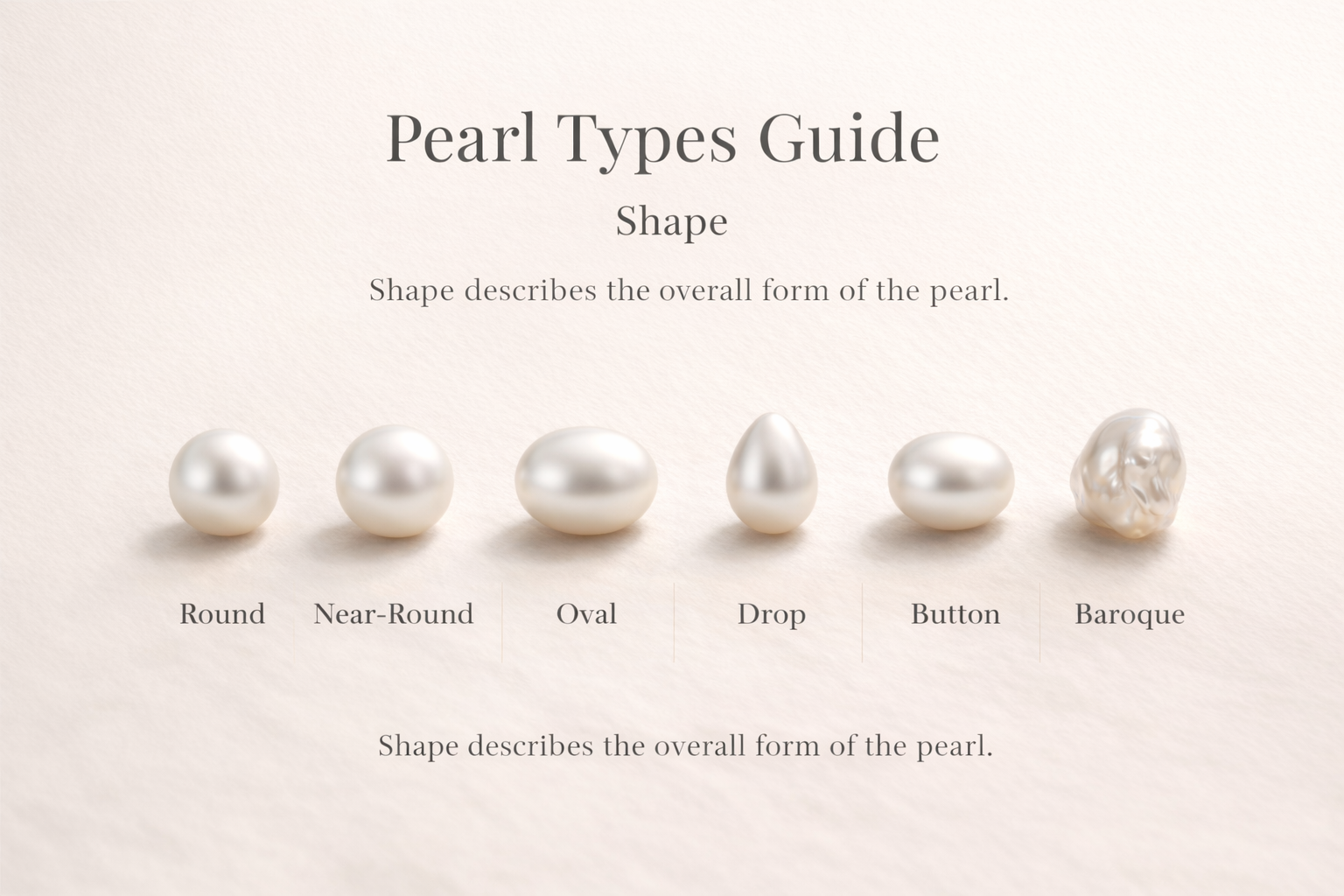
Shape describes the overall form of the pearl.
Common categories include round, near-round, oval, drop, button, and baroque.
Round pearls are often associated with classic, timeless designs and are typically more difficult to match, which contributes to their higher value.
Baroque pearls, on the other hand, offer a more organic and artistic feel. Their individuality makes them especially suited for modern, expressive designs where uniqueness is part of the beauty.
2. Luster
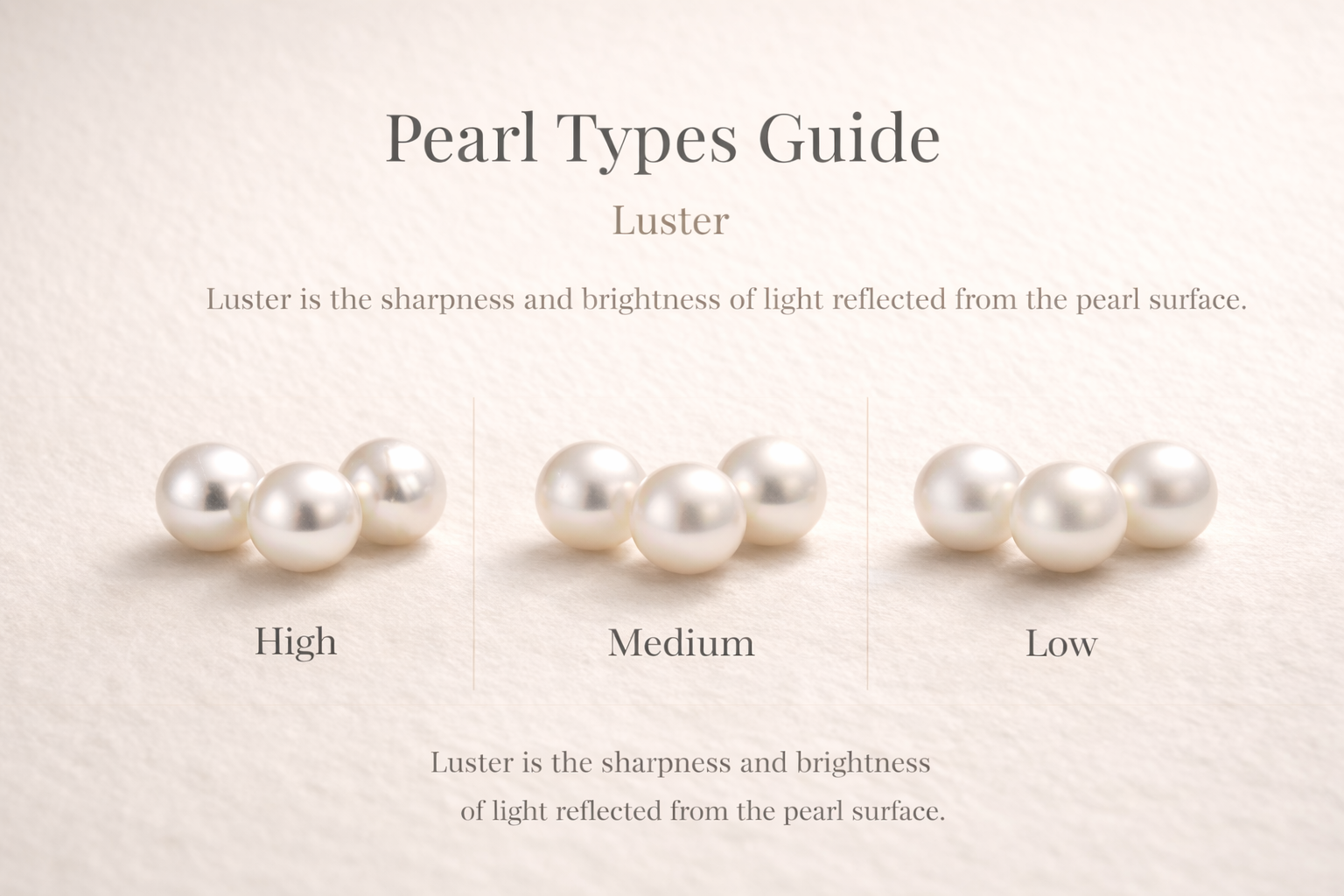
Luster refers to the sharpness and brightness of light reflected from the pearl’s surface.
High-luster pearls appear crisp, luminous, and full of life, with strong reflections and visual depth. Lower-luster pearls tend to look softer or slightly muted.
Among all quality factors, luster often has the most immediate visual impact. It is one of the first things we evaluate when selecting pearls.
3. Surface Quality
Surface quality refers to visible characteristics such as spots, bumps, pits, or natural texture.
Perfectly clean surfaces are rare in natural pearls. Minor imperfections are normal—especially in larger pearls—and are part of their organic formation.
What matters most is balance: whether these natural features are noticeable at a normal wearing distance, and whether they interrupt the overall beauty of the piece.
4. Body Color
Body color is the primary base color of the pearl.
Common tones include white, cream, silver, gold, and deeper gray hues, depending on the pearl type.
Body color plays an important role in how a piece complements skin tone and pairs with different metal settings.
Each pearl type has its own characteristic color range. For example, Akoya, South Sea, Tahitian, and Freshwater pearls are evaluated within different color expectations rather than a single standard.
Choosing the right body color helps a piece feel more natural, flattering, and effortless to wear.
5. Overtone
Overtone is the subtle secondary color that appears on top of the pearl’s body color.
Common overtones include rose, silver, and green.
This delicate layer adds depth, dimension, and personality. It can significantly influence how a pearl is perceived when viewed side by side.
For example, a white pearl with a soft rose overtone often feels warmer and more romantic, while a silver overtone creates a cooler, more modern look.
Like body color, overtone varies by pearl type. Certain overtones are more characteristic—or more desirable—within specific varieties, so they should always be evaluated in context.
We will explore these differences in more detail when discussing each pearl type individually.
How We Evaluate Pearls in Practice
At 33 Pearl Atelier, we do not evaluate these factors in isolation. We assess balance:
- shape harmony with design style
- luster strength in natural light
- surface visibility at normal wear distance
- body color compatibility with skin and metal
- overtone character and consistency across matched pieces
A beautiful pearl is not only technically good on paper, but also visually right for the person wearing it.
Continue Exploring
Discover the Collection
Explore ready-to-wear pieces shaped by the same attention to balance, wearability, and pearl character.
Have a question about a piece? Contact us.