Why these pearl types are worth understanding
Akoya, South Sea, and Tahitian pearls are often mentioned together, but they do not create the same look. If you are choosing pearls for everyday wear, a formal outfit, or a gift, the difference matters. Each type carries a different visual mood, and that changes how the piece reads once it is on the body.
This guide keeps the comparison simple. The goal is not to turn pearls into a technical subject. It is to help you understand what each type tends to communicate so you can choose with more confidence.
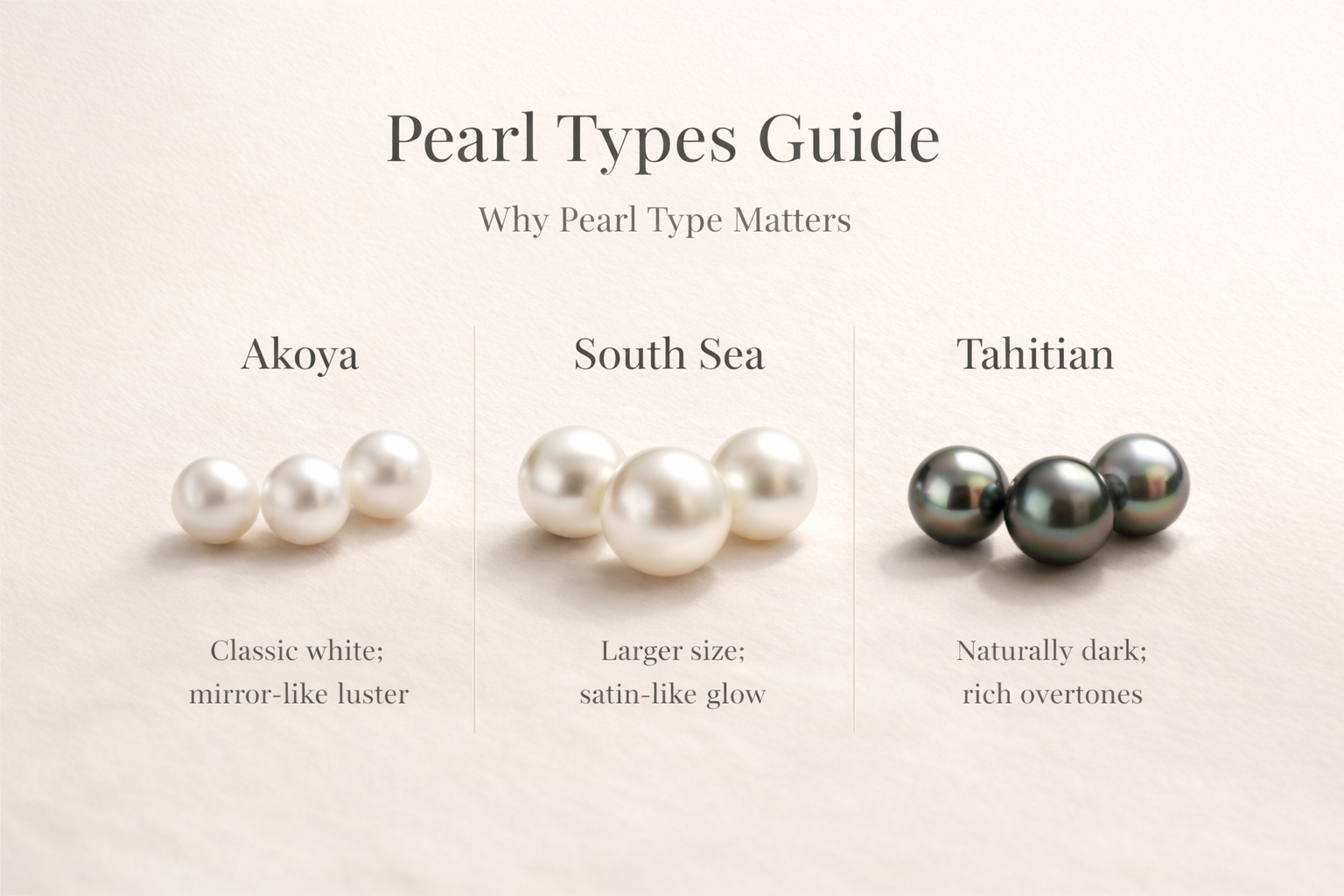
Akoya pearls: classic and refined
Akoya pearls are the most familiar of the three for many readers. They tend to read as polished, traditional, and restrained. That makes them especially useful when you want a pearl that feels clean and easy to wear across settings.
Akoya works well when the goal is a classic impression. It can suit tailored clothing, simple dresses, and occasions where you want the jewelry to feel composed rather than dramatic. In that sense, Akoya is often the quietest option in the comparison.
White and golden South Sea pearls: softer scale and presence
White and golden South Sea pearls belong together in this guide because they share a sense of scale and presence. They often feel more expansive than Akoya, which changes the way they sit in a design.
Stylistically, South Sea pearls tend to bring more visible presence to a look. White South Sea can feel luminous and refined, while golden South Sea can add warmth and richness. In either case, the effect is less delicate and more architectural than Akoya.
That difference matters when you are thinking about balance. A South Sea pearl can become the focal point of an outfit more easily, so it may feel especially strong with pared-back clothing or simpler silhouettes.
Tahitian pearls: modern contrast and depth
Tahitian pearls offer the strongest contrast in this comparison. They often feel deeper, moodier, and more modern in tone, which gives them a distinct place in a pearl wardrobe.
For readers who want something that feels less traditional, Tahitian pearls can be appealing because they introduce more visual depth. They work well when you want a pearl that feels a little more striking without becoming ornate.
In a simple styling sense, Tahitian pearls can sharpen a look that might otherwise feel very soft or expected. They give the wearer a different kind of presence: quieter than sparkle, but more defined than a purely classic pearl.
How to choose based on your style and use case
The easiest way to choose is to start with the mood you want the jewelry to create.
- Choose Akoya if you want a classic, refined pearl that feels easy to wear in formal or everyday polished settings.
- Choose white or golden South Sea if you want more scale, warmth, or visual presence.
- Choose Tahitian if you want contrast, depth, or a more modern feel.
If you work in a professional office or client-facing setting, Akoya is often the most understated choice. It tends to blend smoothly with tailored clothing and neutral wardrobes. South Sea pearls can work well when you want the jewelry to carry more presence without feeling loud. Tahitian pearls are a strong option if your style leans crisp, minimal, or slightly directional.
If you work in a creative field or dress more casually day to day, the choice becomes more personal. South Sea pearls can read as sculptural and considered, while Tahitian pearls can add edge to simpler looks. Akoya remains the cleanest option when you want the pearl to feel quietly versatile.
For formal work settings, presentations, or occasions where you want a polished but not distracting finish, Akoya usually feels the most natural. If your wardrobe already leans toward clean lines and a more modern palette, Tahitian may resonate more. If you want a pearl with noticeable presence that still feels composed, South Sea is often the clearest fit.
The best choice is usually the one that matches your existing wardrobe. If your clothing is soft and classic, Akoya may feel natural. If you tend toward clean lines and a more modern palette, Tahitian may resonate more. If you want a pearl with noticeable presence, South Sea is often the clearest fit.
A simple way to narrow the choice
Think of the three pearl types as three different visual languages. Akoya speaks in classic restraint, South Sea in softer presence, and Tahitian in modern depth.
That simple frame is often enough to move from browsing to deciding. Once you know the mood you want, the choice becomes less about naming pearl types and more about choosing the one that fits the way you actually dress and wear jewelry.
Continue Exploring
Discover the Collection
Explore ready-to-wear pieces shaped by the same attention to balance, wearability, and pearl character.
Have a question about a piece? Contact us.